





How Glass Composite Insulators Enhance Efficiency and Reliability in High Voltage Applications
2026-03-09
How Glass Composite Insulators Enhance Efficiency and Reliability in High Voltage Applications
Table of Contents
1. Introduction to Glass Composite Insulators
2. What Are Glass Composite Insulators?
3. Benefits of Using Glass Composite Insulators
3.1 Superior Dielectric Properties
3.2 Mechanical Strength and Durability
3.3 Lightweight Desig
How Glass Composite Insulators Enhance Efficiency and Reliability in High Voltage Applications
Table of Contents
- 1. Introduction to Glass Composite Insulators
- 2. What Are Glass Composite Insulators?
- 3. Benefits of Using Glass Composite Insulators
- 3.1 Superior Dielectric Properties
- 3.2 Mechanical Strength and Durability
- 3.3 Lightweight Design
- 3.4 Resistance to Environmental Factors
- 4. Applications in High Voltage Environments
- 5. Case Studies: Real-World Applications
- 6. The Future of Glass Composite Insulators
- 7. Frequently Asked Questions (FAQs)
- 8. Conclusion
1. Introduction to Glass Composite Insulators
In the realm of electrical engineering, **insulators** play a pivotal role in ensuring the safety and efficiency of power transmission systems. Among the various types of insulators, **glass composite insulators** have emerged as a leading choice for high voltage applications. Their unique combination of materials not only enhances their performance but also addresses many of the limitations faced by traditional insulators such as ceramic and porcelain.
In this article, we will delve into the myriad benefits of glass composite insulators, their specific applications in high voltage settings, and real-world examples that illustrate their effectiveness. By understanding how these insulators improve performance in demanding environments, we can better appreciate their significance in modern electrical infrastructure.
2. What Are Glass Composite Insulators?
Glass composite insulators are advanced electrical insulators made from a composite material consisting of a glass fiber-reinforced polymer (FRP) core and an insulating sheath. This innovative design combines the strength and lightweight properties of fiberglass with excellent dielectric capabilities.
The key components of glass composite insulators include:
- **Fiberglass Reinforcement**: Provides outstanding tensile and flexural strength.
- **Polymer Sheath**: Offers superior insulation properties and resistance to environmental degradation.
These features make glass composite insulators ideal for high voltage environments where reliability and performance are critical.
3. Benefits of Using Glass Composite Insulators
The following sections outline the primary advantages of glass composite insulators over traditional options.
3.1 Superior Dielectric Properties
One of the most critical factors in electrical insulation is dielectric strength. Glass composite insulators exhibit **superior dielectric properties**, allowing them to withstand high voltage levels without breaking down. The polymer sheath enhances these properties, ensuring minimal leakage current and lower risk of electrical arcing.
3.2 Mechanical Strength and Durability
Glass composite insulators possess remarkable mechanical strength, making them capable of withstanding physical stresses that can occur during extreme weather conditions or seismic events. Their robust structure prevents cracking and breakage, ensuring long-term reliability. This durability translates to lower maintenance costs and reduced downtime, making them an economically sound investment for utilities.
3.3 Lightweight Design
Compared to traditional ceramic insulators, glass composite insulators are significantly lighter. This lightweight design eases transportation and installation, allowing for quicker deployment. Moreover, the reduced weight minimizes the load on supporting structures, enhancing overall stability in high voltage applications.
3.4 Resistance to Environmental Factors
Glass composite insulators exhibit exceptional resistance to environmental factors such as UV radiation, moisture, and temperature fluctuations. Unlike ceramic insulators, which can become brittle over time, glass composite insulators maintain their integrity and performance in diverse conditions. This adaptability ensures consistent functionality, even in harsh environments.
4. Applications in High Voltage Environments
The versatility of glass composite insulators allows them to be used in a variety of high voltage applications, including:
- **Transmission Lines**: Essential for high voltage power transmission over long distances.
- **Substations**: Integral in switching and transforming high voltage electricity.
- **Renewable Energy Systems**: Frequently used in wind and solar energy applications, where reliability is crucial.
5. Case Studies: Real-World Applications
To illustrate the effectiveness of glass composite insulators, we can examine several case studies that highlight their use in high voltage environments.
- **Case Study 1: High Voltage Transmission Line in California**
In California, a utility company faced frequent failures with traditional ceramic insulators on their high voltage transmission lines due to environmental stressors. After switching to glass composite insulators, they reported a significant decrease in outages and maintenance costs, resulting in a more reliable power delivery system.
- **Case Study 2: Wind Farm Integration in Texas**
A large wind farm in Texas implemented glass composite insulators for their turbine connections. The lighter weight allowed for easier installation and reduced structural loads, leading to a more efficient operation. This transition not only improved performance but also enhanced the safety and longevity of the installations.
6. The Future of Glass Composite Insulators
As the demand for reliable and efficient power systems grows, so does the role of glass composite insulators. Innovations in materials science are expected to further enhance the properties of these insulators, making them even more effective in extreme conditions. Additionally, the ongoing transition to renewable energy sources will continue to drive the adoption of glass composite insulators in various applications.
With advancements in manufacturing techniques and design optimization, the future of glass composite insulators looks promising. Their widespread acceptance within the industry highlights their essential role in modern electrical infrastructure.
7. Frequently Asked Questions (FAQs)
1. What is the lifespan of glass composite insulators?
Glass composite insulators typically have a lifespan of 30 years or more, depending on environmental conditions and maintenance practices.
2. Are glass composite insulators more expensive than traditional insulators?
While the initial cost may be higher, the long-term savings due to reduced maintenance and increased reliability often make glass composite insulators a more economical choice.
3. Can glass composite insulators be used in extreme weather conditions?
Yes, glass composite insulators are designed to withstand a wide range of environmental conditions, including extreme temperatures, humidity, and UV exposure.
4. How do glass composite insulators compare to ceramic insulators?
Glass composite insulators are lighter, more durable, and exhibit superior dielectric properties compared to ceramic insulators, making them a preferred option for high voltage applications.
5. What industries primarily use glass composite insulators?
Glass composite insulators are commonly used in power generation, transmission and distribution, renewable energy, and railway electrification systems.
8. Conclusion
In conclusion, glass composite insulators represent a significant advancement in electrical insulation technology for high voltage environments. Their superior dielectric properties, mechanical strength, lightweight design, and resistance to environmental factors make them an ideal choice for modern electrical infrastructure. As the industry continues to evolve, the adoption of glass composite insulators will likely increase, enhancing the reliability and efficiency of power systems worldwide. By investing in these innovative insulators, utilities and companies can ensure a more sustainable and dependable energy future.
Key words:
Related News

Customers from several countries visited our factory for inspection.
Today, our company welcomed important clients from many countries to visit and inspect our factory. This is a significant milestone for our company's global reach, and a moment to showcase our strength and achievements. We are deeply honored and are full of confidence for the future.
2025-04-27
What are the characteristics of glass insulators?
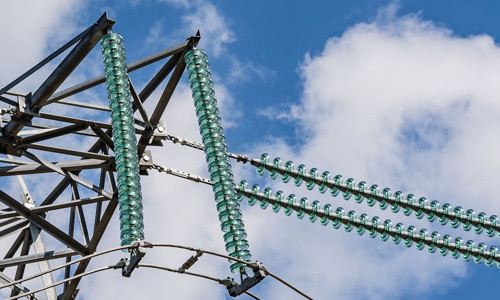
After vacuum injection, the continuous pulling and extrusion of epoxy glass pulling rods is formed after the glass fibers are impregnated with epoxy resin and cured. The insulators used in overhead lines commonly include pin insulators, disc insulators, suspension porcelain bottle insulators, porcelain cross arms, rod insulators, and tension insulators, etc.
2024-05-22

In one minute, let you understand glass insulators.
Glass insulators are widely used in power systems due to their excellent electrical performance, corrosion resistance, and mechanical strength. Next, let's take a detailed look at their advantages.
2024-05-22


Please leave your contact information to us and we will contact you within 24 hours.


Hejian City Yonggu Glass Insulator Manufacturing Co., Ltd. | Poweredby:300.cn | Privacy Policy
City list
Business License